Skip to content
LakeshoreVillage Garage Door ServicesOpen 24/7 (226) 806-0825
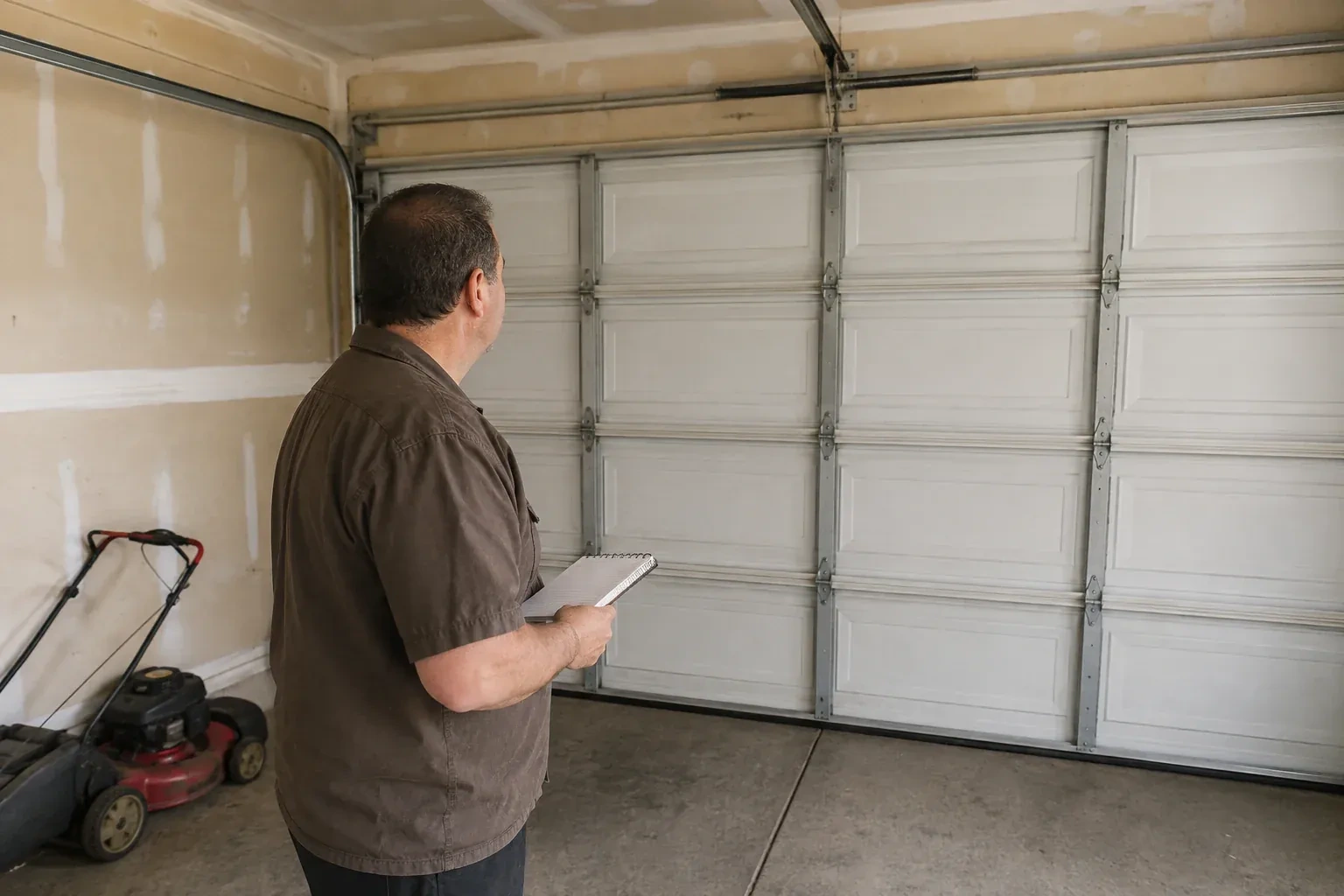
Technician holding a notebook while looking at a closed sectional door. — Garage Door Balance Adjustment, Westmount

Springs · Westmount

Garage Door Balance Adjustment

The door has grown heavy so gradually you stopped noticing, until a visitor tried to lift it and could not. The opener still manages, but it sounds strained, the chain slaps on the way up, and the wall button gets pressed twice most mornings.

In plain words

A balance visit follows a settled order. The technician first checks for a broken spring, displaced cable, binding or track damage; once safe to move, the door is run through a powered cycle, then released to repeat the movement by hand, separating the motor from the door. Springs, cables, drums, rollers, hinges and track are inspected before anything changes. Adjustment comes next, in small steps with a test after each one, until the door holds at every height and sits level. Finally the opener is reconnected, its settings reviewed against the newly balanced door, and the reversing safety tests run while you watch.
Sound familiar?Westmount

The call
The opener has started to groan on the way up. The door climbs slowly, hesitates near the top, and on the way down it sometimes stops a hand's width above the floor and reverses, as if something were in the way when nothing is.

NextHow the visit goes

Garage Door Balance Adjustment · Westmount

How the visit goes

Illustrative garage doors scene — Westmount
  1. Scene 1

    Extension springs and their containment

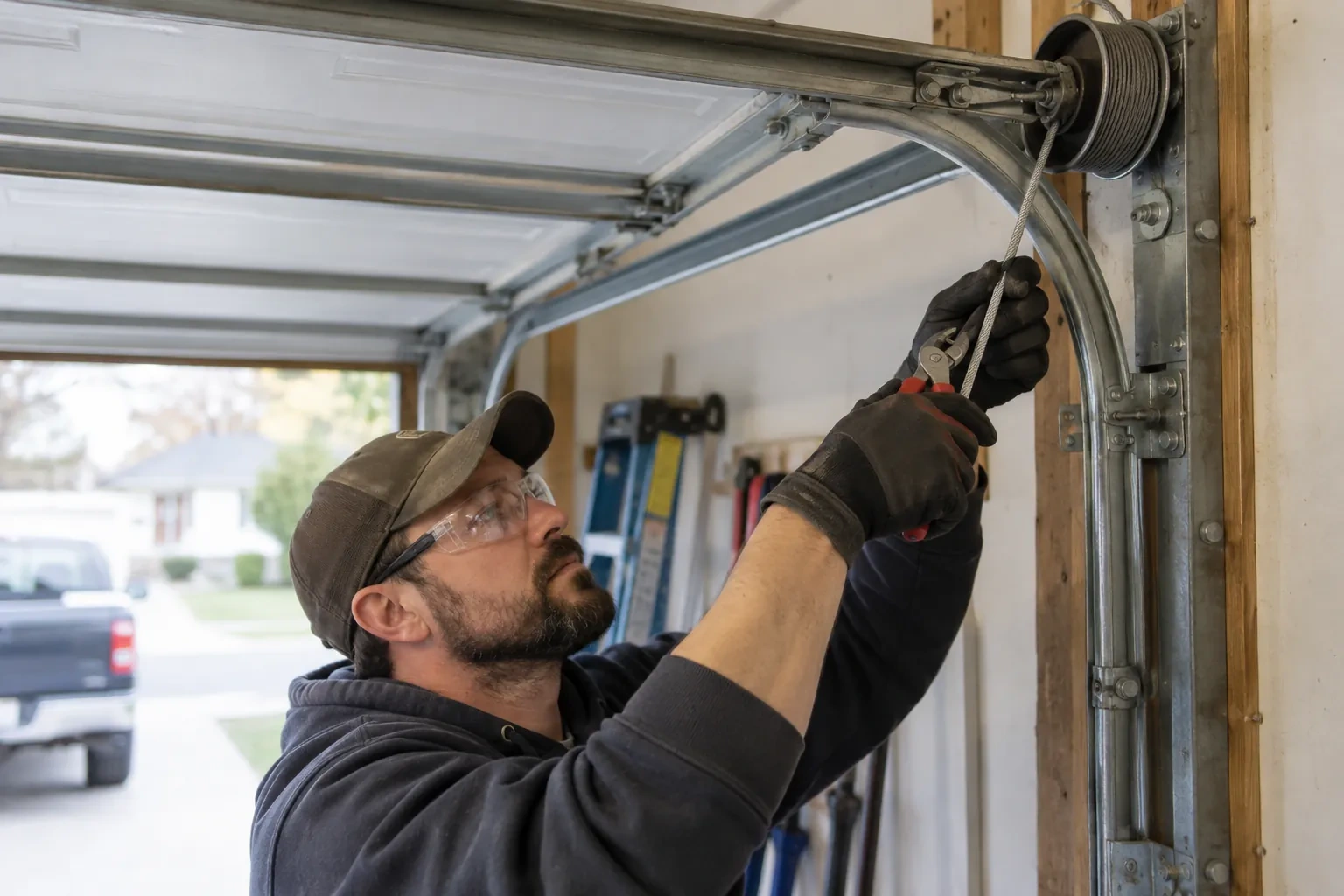
    On a door with springs along the tracks, the check has a shape of its own. Both springs are compared for length and coil condition with the door closed, since a spring that has stretched further than its partner leaves one side of the door lighter. The pulleys are spun for wear, the cable clips on the track hangers are checked for equal position left and right, and the technician confirms a containment cable runs through the centre of each spring and is anchored at both ends. The bottom brackets and the S-hooks that set the spring tension are inspected for rust and deformation before any adjustment is planned.

  2. Scene 2

    Proving the result with the safety tests

    The visit is finished only when the standard tests pass. The technician places a piece of two-by-four flat on the floor in the door's path and closes it with the wall button; the door must strike the wood and return to fully open. Then, with the door closing again, an object is passed through the photo-eye beam, and the door must reverse. Finally the door is released once more and the hand test repeated so you can see it hold at knee height, at waist height and fully open. These are the same checks the door industry's own maintenance checklist uses, and you are welcome to watch each one.

  3. Scene 3

    What the springs still have left

    Part of the visit's value is knowing where the springs stand. If they were adjusted and left in place, you will have been told roughly how much life they appear to have and what signs mark their end: a door that grows heavy again within a season, a coil gap, or rust flaking from the wire. If they were replaced, the door starts a new cycle count and the note by the opener says when they went in. Either way, you can plan the next spring work on your own schedule rather than on the morning the car needs to leave and the door refuses to lift.

In the van

  • Cable drums
  • Winding cone set screws
  • Track clamps or locking pliers
  • Nylon or steel rollers
  • Door scale

What shapes the quoteLakeshore Village Garage Door Services

Commercial or oversized doors
Doors wider or heavier than a standard residential opening use heavier springs, sometimes several on one shaft, and take longer to wind and test, which the quote reflects.
Cold-weather visits
In a cold snap, a frozen bottom seal or stiff hardware has to be freed and warmed before balance can be judged honestly, and a winter call is quoted with that in mind.
Corroded or seized fasteners
Set screws and cone screws that have rusted solid take time to free, and badly corroded hardware is replaced rather than reused, which shows in the parts list.

FeesSame any hour

Have it ready

Before you call · 0 / 3

(226) 806-0825

Your questions, answered

Why does my door sink or slam down when released?

Not enough spring tension for the door's weight. Springs lose a little pull as they age through thousands of cycles, and a door gains weight when insulation, windows or a heavier seal are added. Either way the door outweighs its springs. Adding tension in measured quarter turns restores the hold, provided the springs are sound; if they are near the end of their life, new ones are the right answer.

My door has become noisy. Is that related to balance?

Often, yes. A door that has grown heavy makes the opener labour, the chain or belt slap, and the rollers and hinges complain under load they were never meant to carry. Balancing the door takes that load back onto the springs, and the lubrication and roller checks that come with the visit quiet the rest. A door that runs silently is usually a door that runs light.

Can the opener's force setting be turned up instead of adjusting the springs?

The opener is built to move a balanced door, and its force limit is what makes it stop and reverse on contact. Raising that limit to lift a heavy door pushes the safety behaviour out of its intended range and works the motor and gears hard. The sound order is to balance the door first, then set the opener to suit it. Both are done in the same visit.

Westmountinformation

WaterlooOntario

Garage Door Balance Adjustment · Waterloo, Lakeshore Village, Beechwood, Maple Hills, Rummelhardt

Town
Westmount, Waterloo
In business
23 years
Hours
Open 24/7
Nights, weekends and holidays, same fees
Visits
On-site assessment preferred. Request a visit or call.

2021 census: what it means at the door

Every square is one home in a hundred.

  • 33 in 100 homes · newer homes
  • About 33% of homes in Waterloo were built in 1980 or earlier, according to the 2021 Census.In neighbourhoods built more recently, most garage doors are sectional steel on torsion springs with a belt or chain opener from the same era. The springs on these doors are rated for a set number of cycles, and many are now reaching the end of that first life.
  • Single-detached houses make up about 49% of homes in Waterloo (2021 Census).In areas mixing houses with townhouses and condos, a technician often works on several doors on one street, some owned outright and some looked after by management. Scheduling them together saves everyone time, and we are glad to plan a visit that covers the group.

Source: Statistics Canada, Census Profile

Open Westmount in Google Maps

On-site assessment

Request a visit.

The door has grown heavy so gradually you stopped noticing, until a visitor tried to lift it and could not.

(226) 806-0825, open 24/7.