Skip to content
LakeshoreVillage Garage Door ServicesOpen 24/7 (226) 806-0825
Illustrative garage doors scene — Rummelhardt

Openers · Rummelhardt

Emergency Release Repair

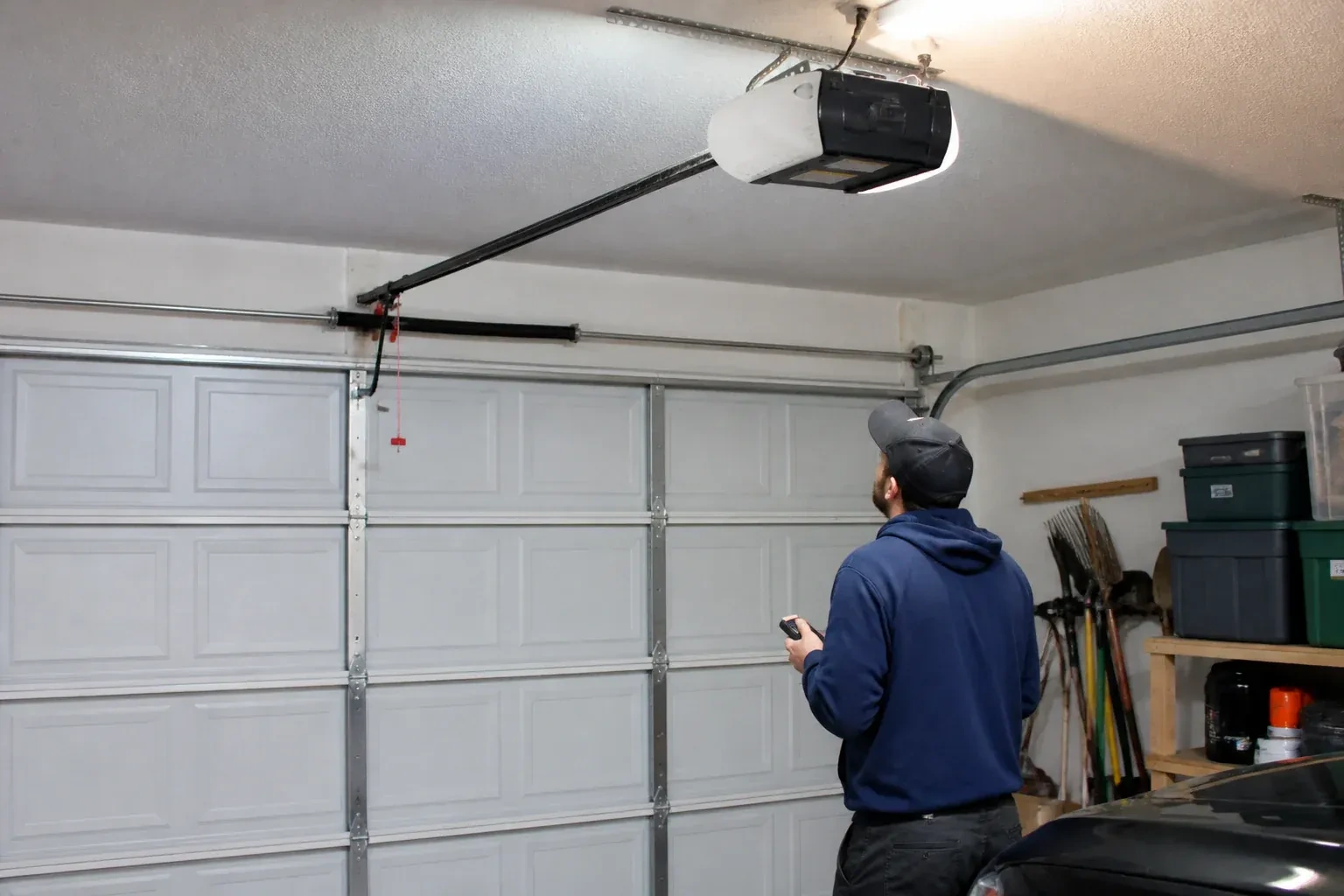
Someone pulled the cord last spring to get a car out during an outage, and the door has never properly rejoined the opener. Press the button and the trolley glides along the rail by itself while the door stays exactly where it is.

In plain words

The release only earns its keep on a door that behaves once it is free of the opener, so the visit starts with the door closed and a balance test rather than with the handle. Disconnected, a healthy door lifts with modest effort, holds around a metre off the floor and stays put at the top. That is the door the release is designed for. If the door is heavy, drifts down or shoots up, the springs need attention first, work done with winding bars by a technician trained for tensioned hardware. Once the door passes, the release work goes ahead and the system is proven together.

Sound familiar?Rummelhardt

The call
The power went out in the middle of an ice storm, the car is inside, and when you reach up for the red handle there is nothing there. A frayed stub of cord hangs from the trolley, well above your fingertips, and the door sits shut.
NextHow the visit goes

Emergency Release Repair · Rummelhardt

How the visit goes

Illustrative garage doors scene — Rummelhardt
  1. Scene 1

    How the door behaves on its own

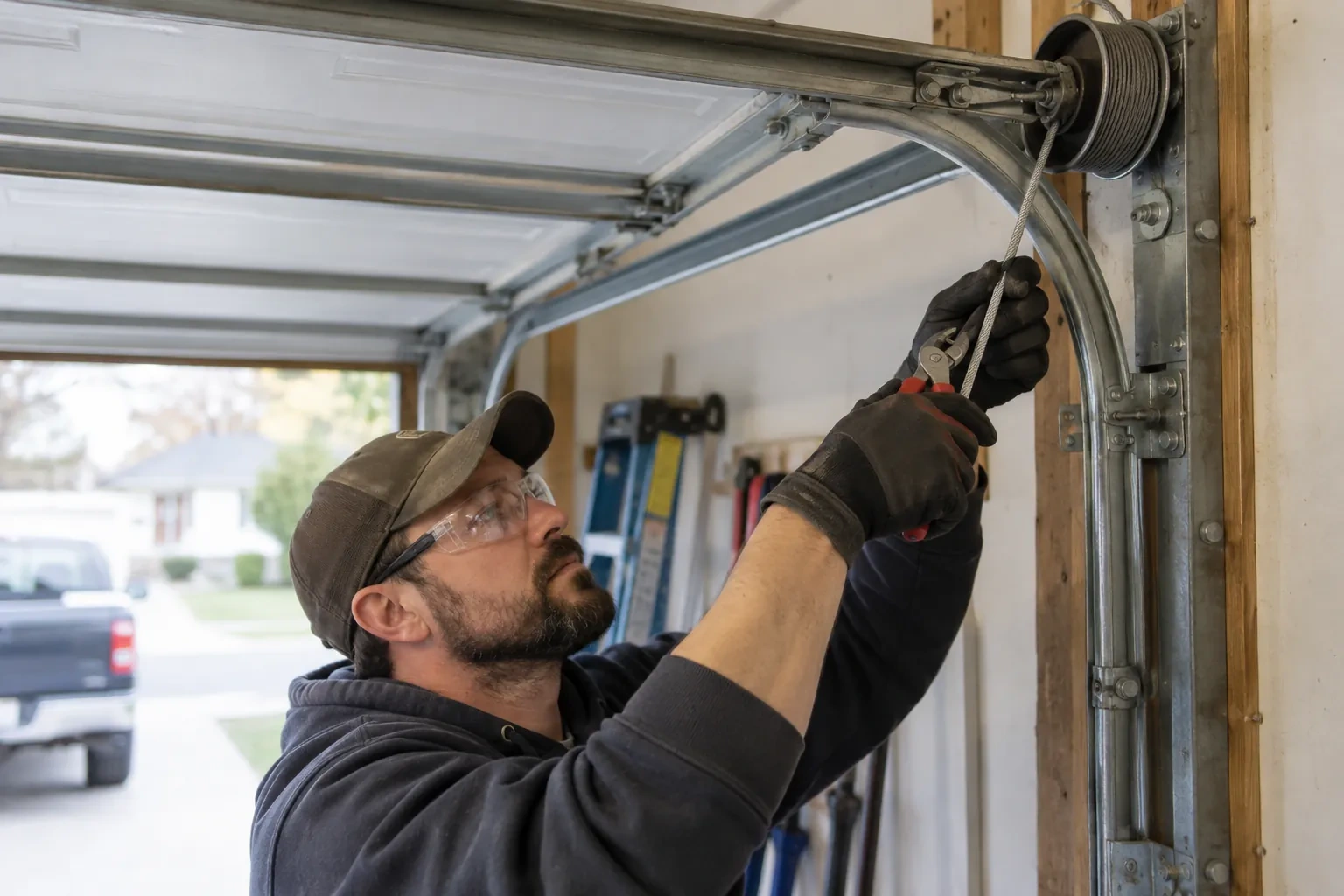
    The release is then pulled with the door closed and the door is lifted by hand, using the door's own handle or a gripping point clear of the section joints. This is the balance test, and it decides the order of the work. A door that rises with modest effort, holds at about a metre and stays fully open is ready for release work. A door that feels heavy, sinks back or springs upward is telling the technician that the counterbalance needs attention first, and the release is left disconnected until that is done. Manufacturers and the industry checklist both put this test ahead of any further use of the release.

  2. Scene 2

    Door work first when the balance test fails

    When the disconnected door proves heavy, drifts or binds, the technician changes the order of the visit. The opener stays disconnected, and the door side is put right first: springs re-tensioned or replaced with winding bars by a technician trained for tensioned hardware, frayed cables replaced, dry rollers and hinges lubricated, a bent track straightened. Only when the door lifts and holds by hand is the release work finished and the trolley reconnected. This keeps the release honest: it is meant to hand you a door you can move, and it can only do that once the springs are carrying the weight.

  3. Scene 3

    Battery backup and outage-prone streets

    If your street loses power a few times each winter, the technician may raise battery backup. Modern openers can carry a battery that opens and closes the door on stored power, which spares you the release altogether in most outages. The battery is a wearing part, generally replaced every few years, and the head unit signals when it is tired. The release remains the fallback when the battery is flat or the opener itself has failed, which is why both are kept in working order. You leave knowing which of the two your household relies on and how each one is checked.

In the van

  • Garage door lubricant
  • Door arm, clevis pins and clips
  • Chain or belt tension hardware
  • 2x4 offcut for the reversal test
  • Trolley and carriage assembly

What shapes the quoteLakeshore Village Garage Door Services

Opener type and rail
A chain or belt unit on a one-piece rail, a sectional square rail, a screw drive and a wall-mounted opener each use a different release part, and the part sets the shape of the job.
Distance to your door
Every visit includes the drive. A property on the edge of the service area or down a long rural road takes more of the technician's day than one a few streets away, and the quote allows for it.
Damage from a door that dropped
A release pulled on an unbalanced open door can bend the arm, the carriage, a bracket or a panel. Anything that took the impact is listed on its own once it has been seen.

FeesSame any hour

Have it ready

Before you call · 0 / 3

(226) 806-0825

Your questions, answered

Can I replace the cord and handle myself?

A rope and handle kit is a simple part, and many homeowners fit one. The details matter, though: the knot at the lever has to hold under a hard pull, the handle has to end up at the right height, and the lever should be checked for wear while you are up there. If the cord failed because the lever or trolley is worn, a new rope alone leaves the real fault in place. Have it done as part of a release check and both get looked at.

Should I test the release regularly?

Once a month is the industry rhythm for the door and opener, and the release fits into it. With the door closed, pull the handle, raise the door by hand to about halfway, feel that it moves freely and holds, then lower it and reconnect. It takes a minute and tells you two things: the release works and the door is balanced. Follow with the 2x4 and beam reversal checks so the whole system is proven together.

What is an outside key release, and should I add one?

It is a keyed cylinder, mounted through the top section on a sectional door or at mid-height on others, with a cable running back to the trolley lever. Turn the key, pull the cylinder, and the door is free to lift from the driveway. It earns its place on any garage where the overhead door is the only way in, especially a detached garage. It can be fitted during the same visit, with two keys, once the door and opener are checked for a compatible kit.

Rummelhardtinformation

WaterlooOntario

Emergency Release Repair · Waterloo, Lakeshore Village, Westmount, Beechwood, Maple Hills

Town
Rummelhardt, Waterloo
In business
23 years
Hours
Open 24/7
Nights, weekends and holidays, same fees
Visits
On-site assessment preferred. Request a visit or call.

2021 census: what it means at the door

Every square is one home in a hundred.

  • 33 in 100 homes · newer homes
  • About 33% of homes in Waterloo were built in 1980 or earlier, according to the 2021 Census.Where homes are newer, the garage is usually attached and often has living space over it, so the door forms part of the insulated envelope. Insulated panels, tight perimeter weatherstrip and a good bottom seal make a real difference to the comfort of the room above.
  • Single-detached houses make up about 49% of homes in Waterloo (2021 Census).A neighbourhood with a mix of detached houses and townhouses or condos means a technician moves between a wide family double door and a narrow single in a row within the same afternoon. The van carries hardware for both, and each visit is planned for that door.

Source: Statistics Canada, Census Profile

Open Rummelhardt in Google Maps

On-site assessment

Request a visit.

Someone pulled the cord last spring to get a car out during an outage, and the door has never properly rejoined the opener.

(226) 806-0825, open 24/7.