Lakeshore Village Garage Door ServicesBulletin 1 of 3Waterloo, Ontario
Sectional Garage Door Replacement: step by step
For an exterior update, the service combines design selection with mechanical planning.
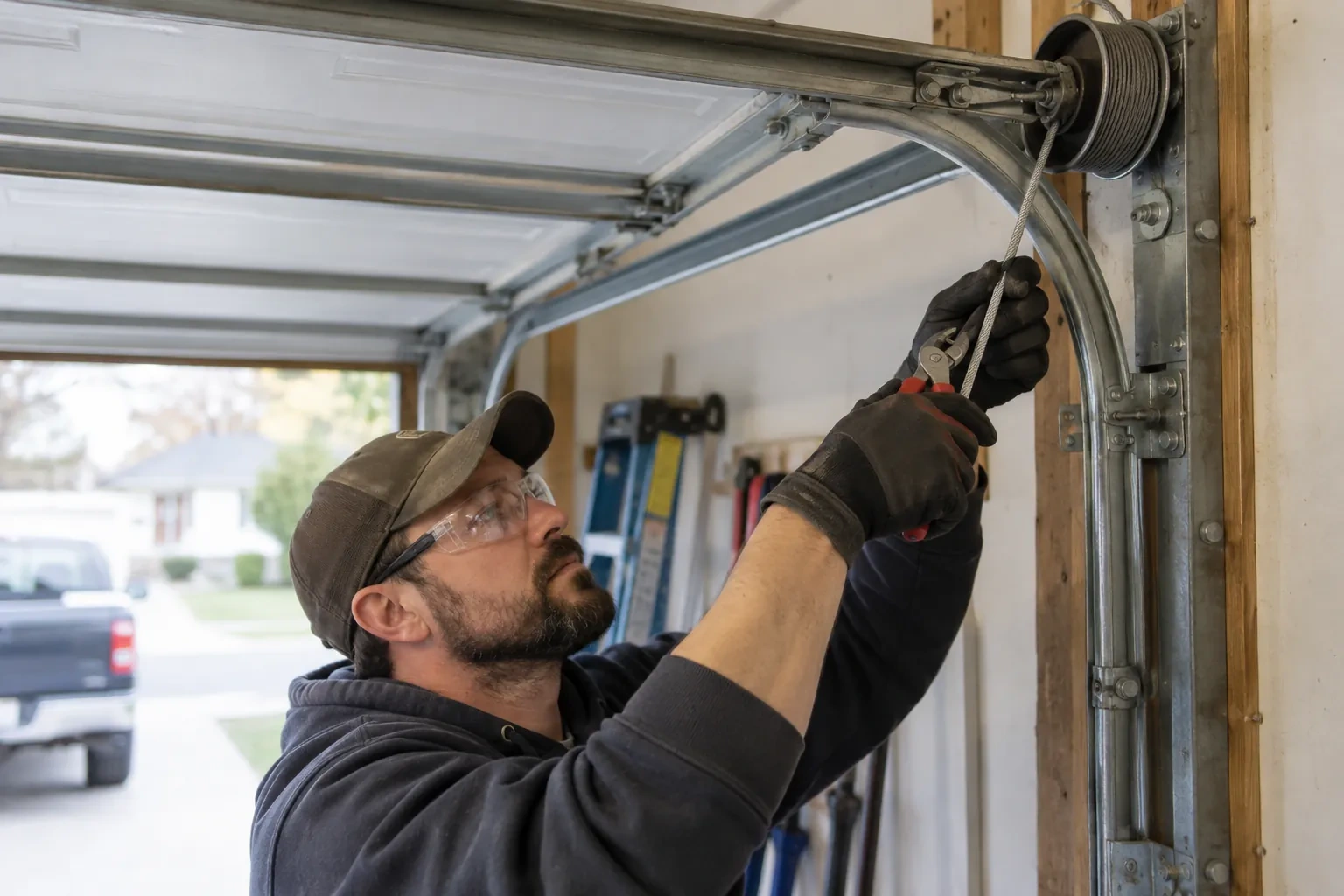
For an exterior update, the service combines design selection with mechanical planning. Panel profile, colour, window placement and glass type are chosen alongside door weight, reinforcement and available clearance. The measured opening determines the section size and track geometry, while the intended operator affects bracket and strut details. On installation, the existing system is taken down, compatible components are fitted as a complete assembly, and seals are set around the closed door. The customer receives an entrance that suits the building and operates as one properly matched system.
Choosing section construction
The conversation then turns to how the garage is used. An attached space, a workshop, an unheated storage bay and a frequently opened commercial-style entrance place different value on insulation, interior finish, dent resistance and weight. Section thickness and construction influence the hinges, track and counterbalance specification as well as comfort. The check connects those performance goals to product information, making the choice about the whole door rather than a single insulation figure.
Installing the counterbalance assembly
Lift cables are routed and seated on their drums or pulleys, with bottom fixtures kept under controlled handling. The torsion or extension spring system is mounted using the supplied brackets, shaft supports, containment parts and matched hardware. Trained technicians apply tension in the prescribed sequence, watching cable tracking on both sides. Because the counterbalance is selected for the completed door weight, its setup aims for stable, manageable manual movement throughout the travel range.
Simple observations between service visits
No special tools are needed for regular owner checks. From a safe distance, look for cables that have changed position, loose-looking hardware, rollers leaving their expected path or new gaps around the closed door. Listen for a new scrape and notice whether manual balance feels different during a scheduled test. Springs, cables and bottom fixtures remain technician-adjusted components; reporting a change gives the service visit a precise starting point.