Skip to content
LakeshoreVillage Garage Door ServicesOpen 24/7 (226) 806-0825
Illustrative garage doors scene

Openers · Waterloo

Emergency Release Repair

Someone pulled the cord last spring to get a car out during an outage, and the door has never properly rejoined the opener. Press the button and the trolley glides along the rail by itself while the door stays exactly where it is.

In plain words

Emergency release repair puts the manual disconnect on an opener into working order. That disconnect is the red handle on a cord below the rail, the spring-loaded lever it pulls, and the trolley that lets go of the door when the lever is thrown and grips it again when the two are brought back together. When any of those parts is missing, bent, worn or set at the wrong height, moving the door by hand in an outage becomes a struggle and reconnecting it afterwards a puzzle. The technician fits parts made for that opener, sets the handle where it belongs, and proves the sequence from disconnect to reconnect.

Sound familiar?Waterloo

The call
The power went out in the middle of an ice storm, the car is inside, and when you reach up for the red handle there is nothing there. A frayed stub of cord hangs from the trolley, well above your fingertips, and the door sits shut.
NextHow the visit goes

Emergency Release Repair · Waterloo

How the visit goes

Illustrative garage doors scene
  1. Scene 1

    Reading the release as a chain of parts

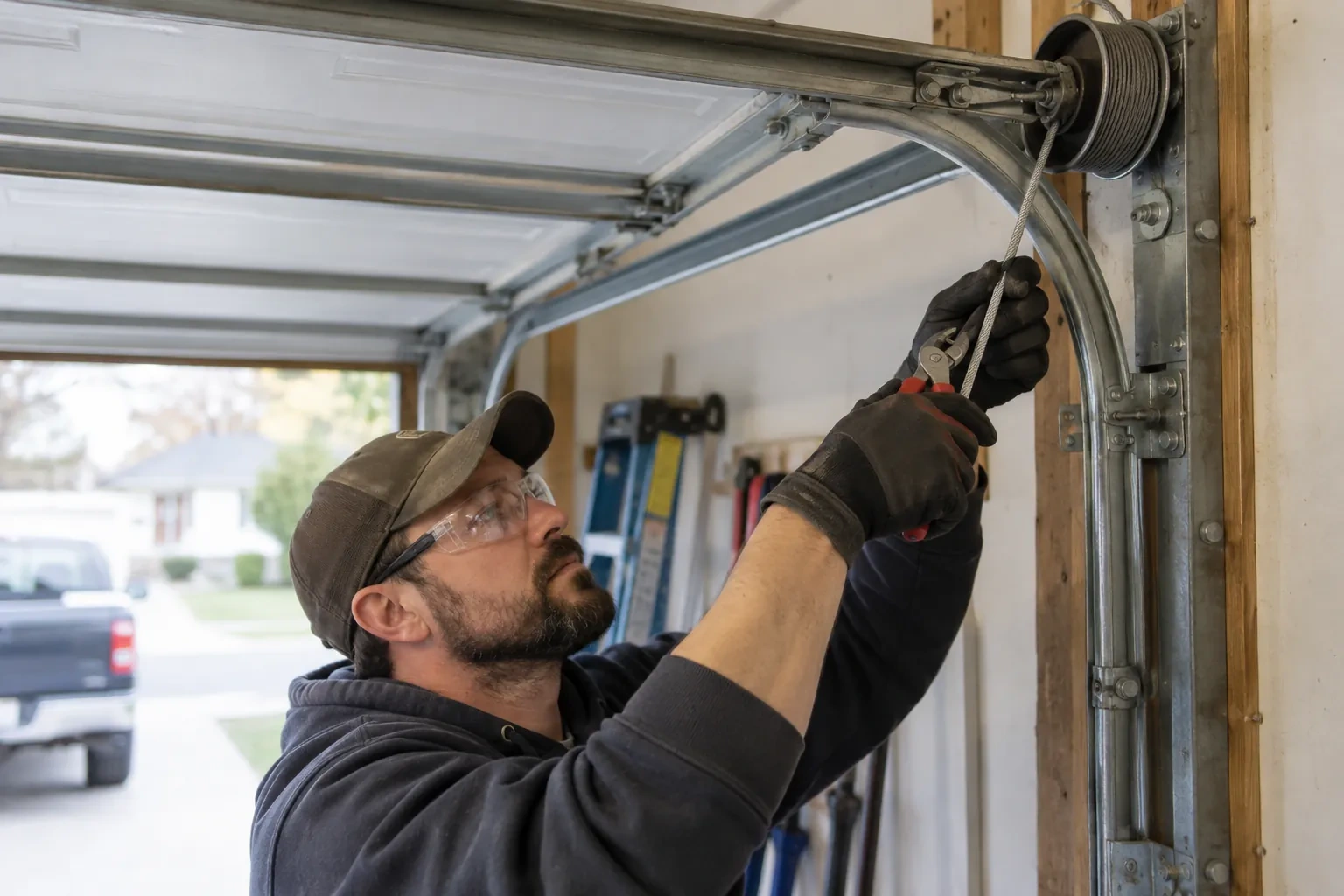
    With the door settled, the release is inspected link by link rather than as a single handle. The cord: frayed, knotted, sun-rotted or cut short. The handle: present, red, and the right shape to grip. The lever on the trolley: does it swing fully to the release position and snap back, or is it bent, sticky or missing its spring. The trolley and carriage: are the latch surfaces worn, is the body cracked, is the arm to the door straight. The stops at either end of the rail: has the trolley been driven into one. Each link is checked so the repair replaces what failed rather than the part nearest to hand.

  2. Scene 2

    Fitting or repairing the outside key release

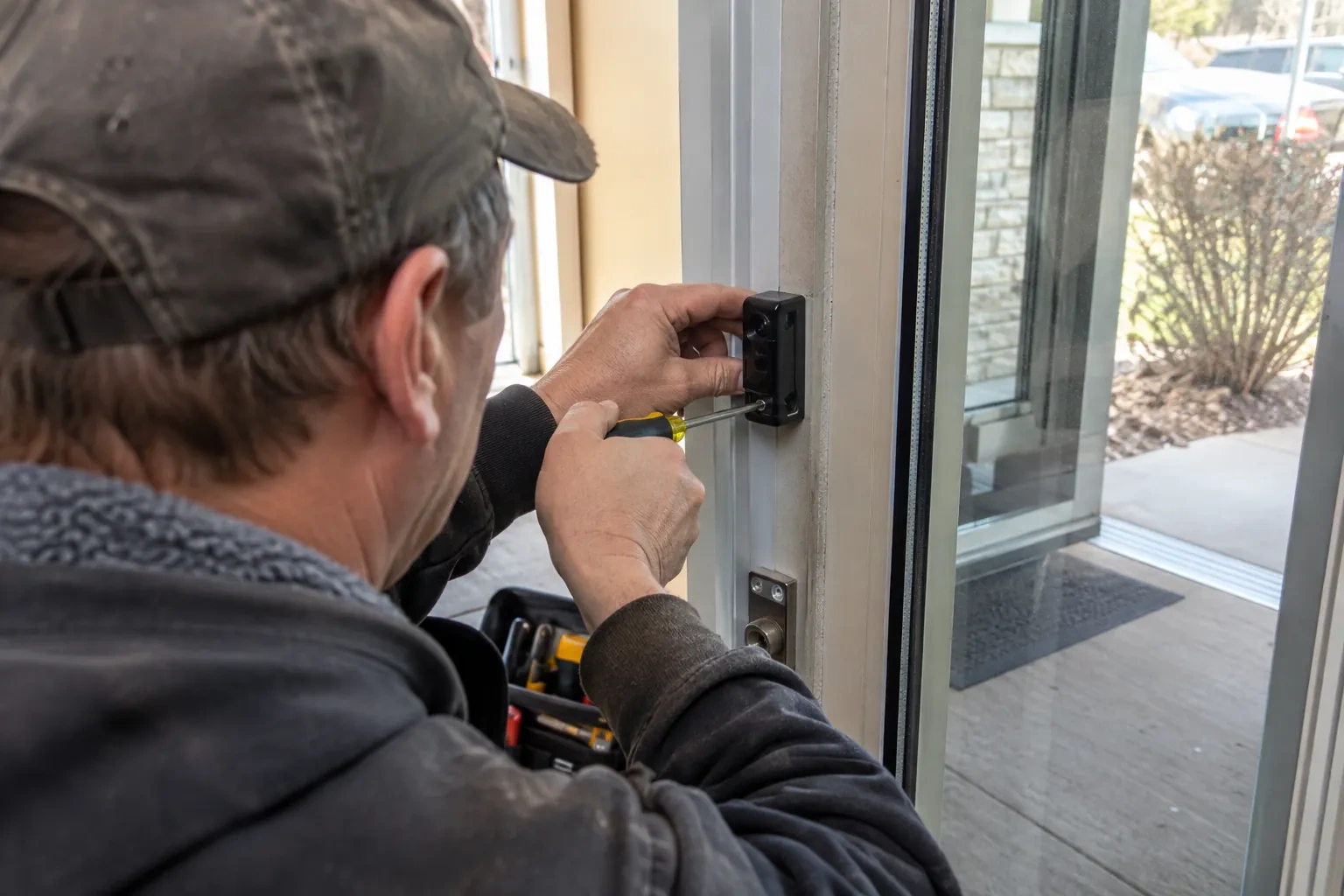
    For a garage with no other way in, an outside release is fitted or repaired. A hole is cut for the cylinder where the kit and door call for it, the top section on a sectional door or mid-height on others, the lock is mounted with its plate, and a cable is run from the back of the cylinder to the release lever on the trolley, clear of the section joints and the top bracket as the door bends into the track. The cable is set with slack enough that turning the key and pulling the cylinder throws the lever fully. A seized cylinder is replaced, a stretched cable re-set or renewed, and two keys are handed over.

  3. Scene 3

    A monthly minute of checking

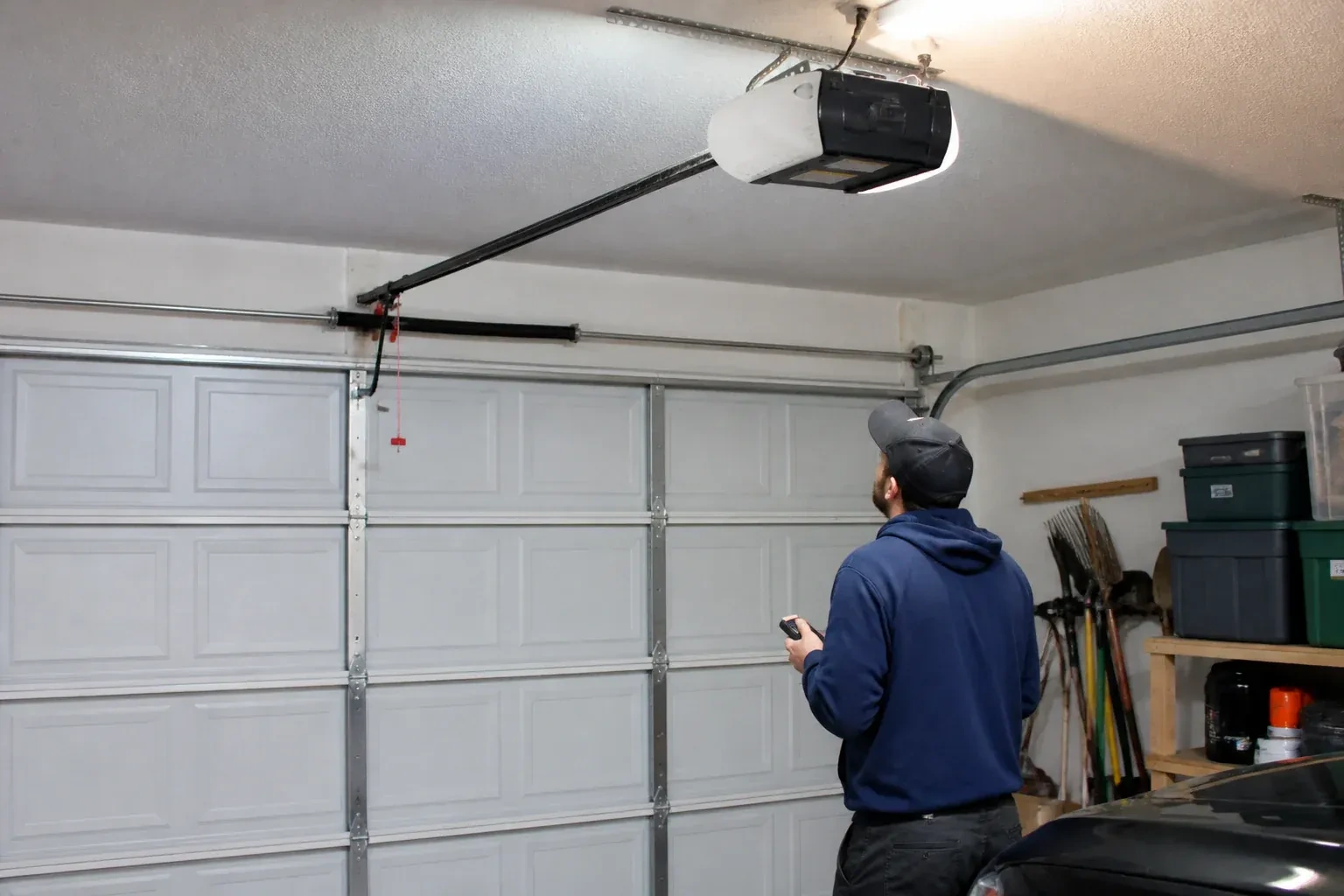
    The industry advice is to look over the door and opener about once a month, and the release fits into that habit. With the door closed, pull the handle and raise the door by hand to about halfway to feel that it moves freely and holds where you leave it; then lower it and reconnect. Follow with the reversal checks: the door should back off a length of 2x4 laid flat on the floor and reverse when something passes through the sensor beam. If the door ever feels heavier than it did today, or the trolley stops clicking home, that is the moment to call rather than to keep using it.

In the van

  • Garage door lubricant
  • Door arm, clevis pins and clips
  • Chain or belt tension hardware
  • 2x4 offcut for the reversal test
  • Trolley and carriage assembly

What shapes the quoteLakeshore Village Garage Door Services

Damage from a door that dropped
A release pulled on an unbalanced open door can bend the arm, the carriage, a bracket or a panel. Anything that took the impact is listed on its own once it has been seen.
Demonstration and labelling
Walking the household through the release, fitting a fresh warning and instruction label near the wall control, and adding handles or gripping points to the door are small tasks that are itemized when they are part of the visit.
Door work found by the balance test
If the disconnected door proves heavy or drifting, spring, cable or roller work comes before the release is put back into use, and that door-side work is quoted as its own item.

FeesSame any hour

Have it ready

Before you call · 0 / 3

(226) 806-0825

Your questions, answered

Can I replace the cord and handle myself?

A rope and handle kit is a simple part, and many homeowners fit one. The details matter, though: the knot at the lever has to hold under a hard pull, the handle has to end up at the right height, and the lever should be checked for wear while you are up there. If the cord failed because the lever or trolley is worn, a new rope alone leaves the real fault in place. Have it done as part of a release check and both get looked at.

Should I test the release regularly?

Once a month is the industry rhythm for the door and opener, and the release fits into it. With the door closed, pull the handle, raise the door by hand to about halfway, feel that it moves freely and holds, then lower it and reconnect. It takes a minute and tells you two things: the release works and the door is balanced. Follow with the 2x4 and beam reversal checks so the whole system is proven together.

What is an outside key release, and should I add one?

It is a keyed cylinder, mounted through the top section on a sectional door or at mid-height on others, with a cable running back to the trolley lever. Turn the key, pull the cylinder, and the door is free to lift from the driveway. It earns its place on any garage where the overhead door is the only way in, especially a detached garage. It can be fitted during the same visit, with two keys, once the door and opener are checked for a compatible kit.

Waterlooinformation

WaterlooOntario

Town
Waterloo
In business
23 years
Hours
Open 24/7
Nights, weekends and holidays, same fees
Visits
On-site assessment preferred. Request a visit or call.

2021 census: what it means at the door

Every square is one home in a hundred.

  • 33 in 100 homes · newer homes
  • About 33% of homes in Waterloo were built in 1980 or earlier, according to the 2021 Census.Where houses are newer, driveways slope up to the door and the apron is smooth, so the bottom seal usually meets the floor evenly. Seal work here is more about replacing a section cracked by winter salt than about closing a gap, and it is a small, worthwhile job.
  • Single-detached houses make up about 49% of homes in Waterloo (2021 Census).Where housing is mixed, the doors are mixed as well: wide insulated doubles, narrow singles in rows and the occasional rolling door on a small commercial unit at the corner. Spring type, cable length and opener strength are matched to each door individually.

Source: Statistics Canada, Census Profile

Open Waterloo in Google Maps

On-site assessment

Request a visit.

Someone pulled the cord last spring to get a car out during an outage, and the door has never properly rejoined the opener.

(226) 806-0825, open 24/7.