Sound familiar?Waterloo
- The call
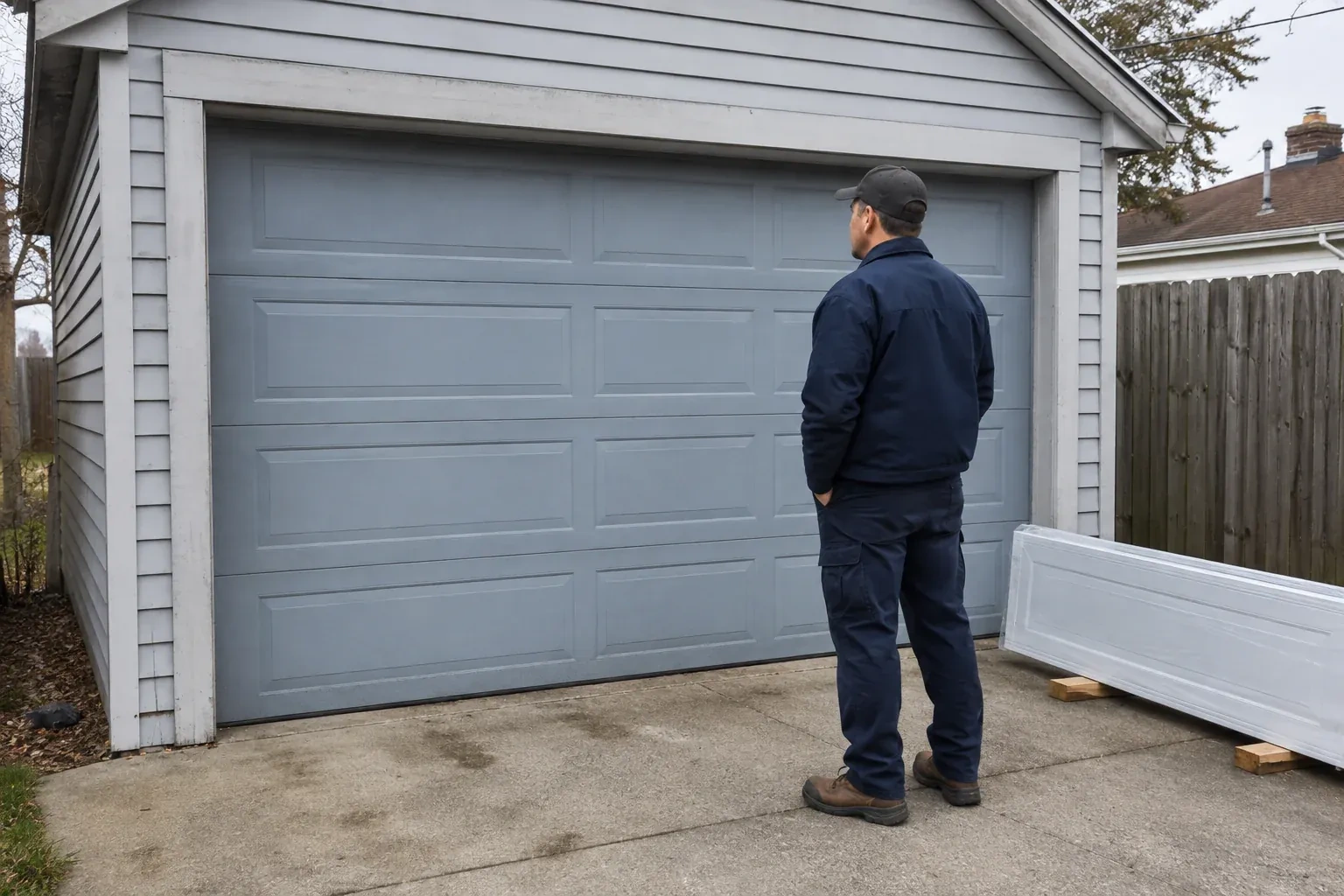
- Cold weather has exposed a widening gap below the closed door. The bottom retainer is bent, the rubber seal is split, and uneven seating lets drafts and slush enter the work area.
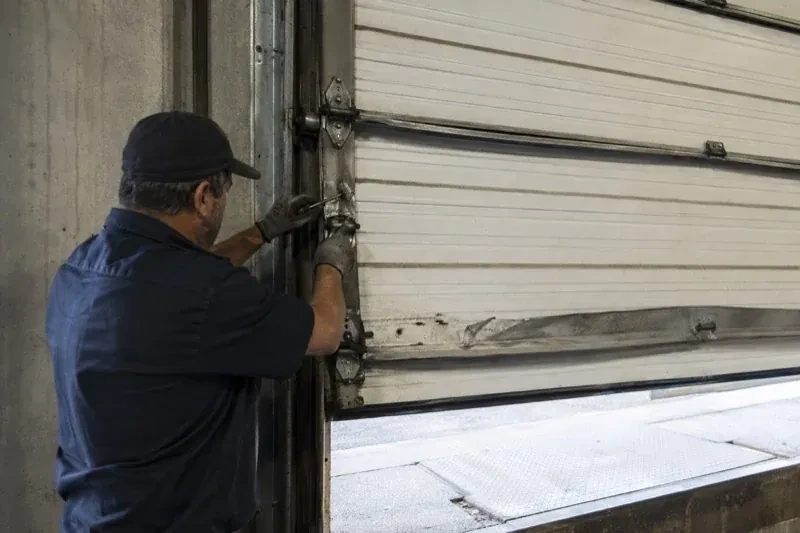
For a facility with several sectional doors, the repair visit can separate one isolated failure from wear shared across similar openings. Door identification, cycle demand and service history help explain why one bay developed loose hinges, tired rollers or spring imbalance first. The affected opening receives the defined repair, while comparable components on adjacent doors can be visually noted for planning. A clear service record then identifies what changed, which settings were tested and what routine observations facility staff can continue between visits.
Sound familiar?Waterloo
Commercial Sectional Door Repair · Waterloo
Scene 1
Model and serial information, opening size, section construction and prior service notes narrow the inspection before anything is removed. The technician also asks about daily traffic, recent collisions, changes in sound and the position where symptoms occur. Comparing this history with spring markings, cable dimensions, roller stems and operator data helps identify compatible components. On multi-door properties, neighbouring openings may provide useful context when they share an installation date or configuration. Good records turn a broad complaint into a precise repair plan and leave a stronger baseline for later maintenance.
Scene 2
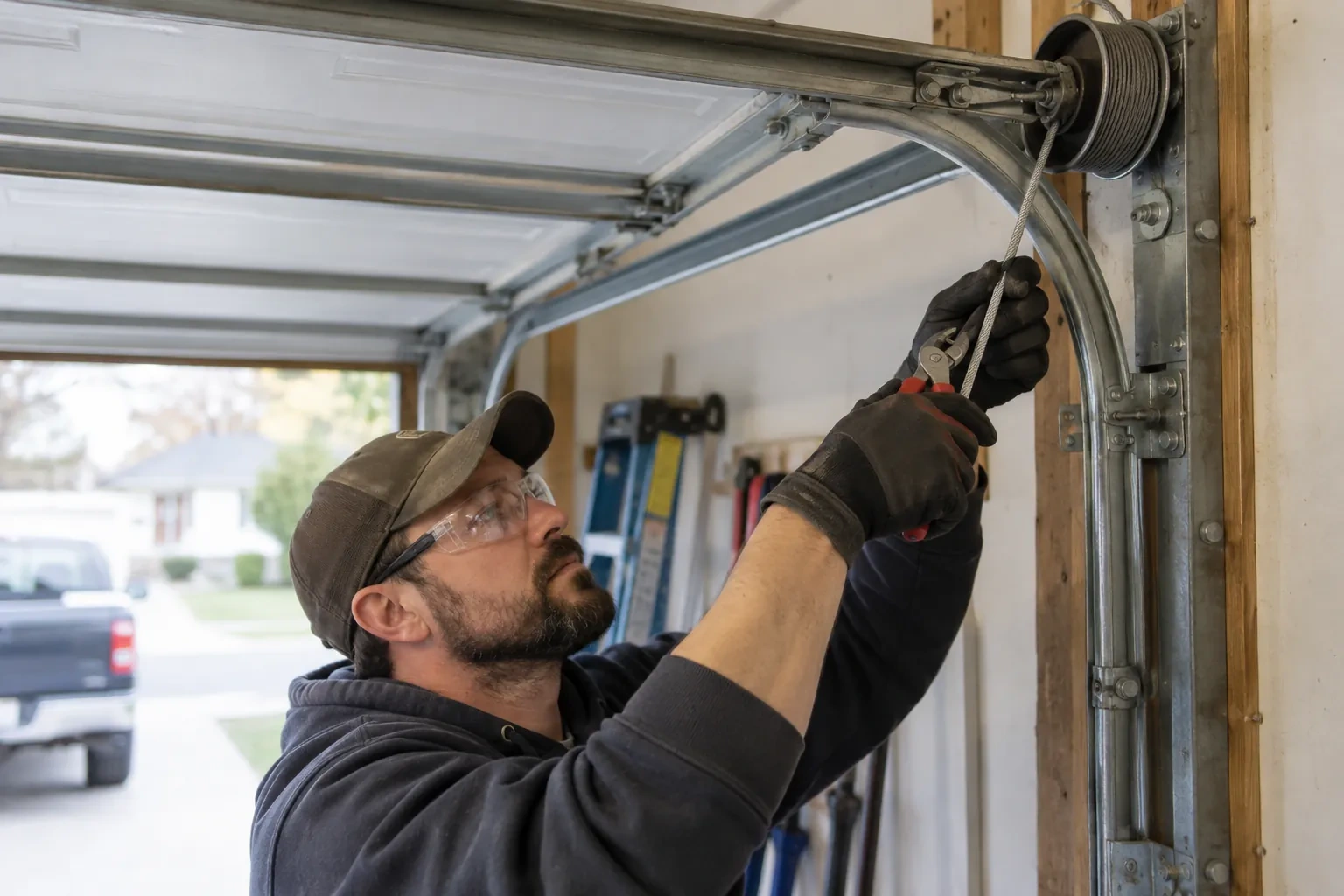
Cable and spring work is performed with the door secured and spring energy under deliberate control. Matched lift cables are routed from sound bottom fixtures to compatible drums, seated in their grooves and brought to equal tension. Bearings, shaft alignment and anchor points are checked before springs are set for the actual door weight and lift configuration. The technician then evaluates balance at several positions. A level bottom edge and stable movement show that both sides are sharing the load as intended rather than relying on the operator to pull the door straight.
Scene 3
New rollers, hinges or bearings reduce play at the points that previously knocked or vibrated. Ongoing care means using the lubricant and interval stated for the installed door, applying it to moving pivots and bearings rather than coating the track. Tracks stay clean so rollers can travel on a firm surface without collecting grit. A simple note in the facility log describing the former sound and repaired location gives staff a reference. If a distinct noise returns at the same travel point, that observation makes follow-up assessment more focused.
What shapes the quoteLakeshore Village Garage Door Services
FeesSame any hour
Roller diameter, stem length, bearing construction, track size and expected door use all shape the choice. The hinge position also matters because numbered end hinges place rollers at different offsets as the panels stack. The technician checks track condition and the mounting areas before fitting new rollers, so renewed hardware runs in a stable and correctly aligned guide.
A reversal can start with a blocked or misaligned photoelectric sensor, a distorted sensing edge, resistance in the track, an incorrect close limit or a control-circuit issue. Inspection covers the clear opening, sensor alignment and wiring, bottom edge and mechanical travel. The source is corrected first, then the protective response is tested through several complete cycles.
The repair area needs controlled access while the door is supported, tensioned components are handled and operational tests are performed. Facilities can redirect pedestrians, forklifts and vehicles to another route and keep stored goods clear of the tracks and threshold. Once tools and supports are removed, the technician completes the agreed tests before returning the bay to normal traffic.
WaterlooOntario
Commercial Sectional Door Repair · Lakeshore Village, Westmount, Beechwood, Maple Hills, Rummelhardt
Every square is one home in a hundred.
On-site assessment
A high-lift door begins smoothly, then a cable loses tension as the top sections change direction.
(226) 806-0825, open 24/7.
On-site assessment preferred · (226) 806-0825, open 24/7